

Perempuan Melayu Terakhir – The Quest for Malay Authenticity In Postcolonial Times Through a Gendered Approach: A Film Analysis
by Izza Khaleeda, University of Nottingham Malaysia
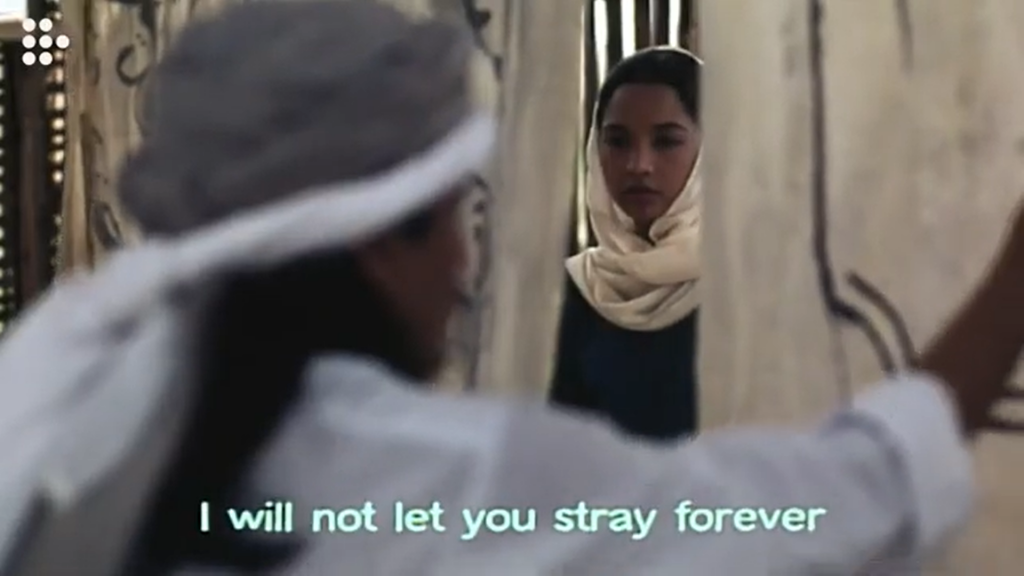
Specifically, the rise of the Malay middle class in the late 20th century experienced rapid urbanisation due to economic and political changes which heavily emphasised Malay ethnicity and hypermasculinity at the forefront of modernisation. While the Malay middle class do not present themselves as homogenous, the postcolonial anxieties experienced by this community is reflected in their identity formation and both genders grapple with balancing between tradition and modernity.
It is through these anxieties that the conception of the Perempuan Melayu Terakhir (PMT) was conceptualised, which then can be seen cinematically depicted by Erma Fatima’s film (1999) of the same name where Mustika, the deuteragonist, embodies this identity. I argue that the PMT identity was created to quell postcolonial anxieties faced by the Malay middle class through Stuart Hall’s Imagined Rediscovery (1990) of Malay authenticity by utilising Erma Fatima’s film.
I take Mustika who is positioned and positions herself as someone who while perfectly symbolising the PMT identity sheds light that there exists a multitude of differences beyond the rigidity of this idealised imagined identity by relating it to Hall’s cultural identity as both ‘being’ and ‘becoming’.
1. PEREMPUAN MELAYU TERAKHIR: A SYNOPSIS
The film tells the story of Haikal – a Malay man who had spent nearly a decade pursuing his Masters in performing arts in London. Upon returning home, he worked as a lecturer and a playwright with a penchant for Western arts and literature. He regarded Western education and philosophy as far more superior, glorifying those such as Sartre and Camus.
After negative criticisms bombarded his latest work, regarding it as too ‘westernised’ (the portrayal of women in his play as being sexually liberal coupled with the fact that its backdrop is set against what can only be assumed as a brothel), Haikal began to question what it meant to be ‘Malay’ instead. This, coupled with the innate desire to fulfil the last wishes of his late English wife Linda, who had insisted that he raised their daughter Sofea as a ‘proper Malay’ kick-started his journey to seek the essence of Malay theatre, and discover for himself the roots of his Malay identity.
At his friend’s suggestion, Haikal went to Terengganu whereby he was introduced to Pak Ungku, the organiser of the cultural performances of the resort they were staying in. Soon after, Haikal met Mustika – Pak Ungku’s colleague who functioned as a tour guide, as well as a teacher of Malay traditional dance – and was immediately drawn by her beauty, charm, and intelligence. Mustika was portrayed to be both knowledgeable in many different areas of the arts and contemporary issues, as well as having a burning passion for the Malay traditional practices. She told him, despite having a bachelor’s in business, she had chosen to remain in Terengganu where she was able to practice and teach the Makyong.
The story progresses, and we are introduced to Ku Leh – Mustika’s fiancée and Pak Ungku’s son. Ku Leh was opposed to the modern way of living, and instead followed very strict, scripturalist Islamic practices. He led borderline radical, obstructive practices such as holding demonstrations to spread philosophies against modernity and Malay traditional customs, claiming them to be a detriment to the Islamic values and way of life. There was a constant struggle between Ku Leh and Pak Ungku, who then implored Mustika to placate him but it proved to be even more difficult, particularly when a series of conflict led to Ku Leh and his disciples burning down a local wayang kulit theatre in an attempt to influence the community to realise that practicing Malay traditions was fundamentally un-Islamic.
Meanwhile, Haikal, having spent a considerable amount of time with Mustika, realised the qualities she possessed were the true essence of Malayness, and thus what he was looking for in his play. Not only that, he was also beginning to feel an attraction towards her. Mustika on the other hand, was conscious in keeping her distance due to her status as an engaged woman and refused to acknowledge the same budding attraction she felt for him.
There was a brewing tension between the two, Haikal realised, and decided to put it to a test one day when he ‘kidnapped’ her by taking her to visit his mother without her consent. Initially, Mustika put up a resistance, demanding him to let her go. However, due to the circumstances, she relented, and was then introduced to his mother and daughter.
They spent the night in his mother’s home, where Mustika realised that she could no longer deny the ‘perasaan’ (feelings) she had for him. She sought him in her dreams: in it, she shared an intimate moment with him.
The climax was introduced when Haikal, after a shower, realised that Sofea was missing. Grief-stricken, he soon discovered that it was Ku Leh and his disciples who were responsible for kidnapping his daughter. He and Mustika made haste to confront him. A fight ensued, and Haikal was about to be stabbed to death before the timely arrival of Pak Ungku who managed to prevent Ku Leh from brandishing his sword to Haikal’s form in the name of Islam.
With the conflict resolved, Haikal returned to the city and Mustika chose to remain by Ku Leh’s side. Time passed and Haikal achieved success with his latest play titled Perempuan Melayu Terakhir. He returned to Terengganu with Sofea after he was informed of Mustika and Ku Leh’s wedding. There, he shared a last knowing look with Mustika and shook Ku Leh’s hand as a gesture of peace. While there was no outward act of apology from Ku Leh, it was heavily hinted that he was under the process of rehabilitation from his radical ways.
The film ended with Haikal sitting on the balcony of the resort, imparting words to Sofea saying that she must grow up and continue the legacy of the PMT, maintaining purity and loyalty, much like Mustika had.
2. MALAY IDENTITY FORMATION IN POSTCOLONIAL TIMES
Firstly, it is worth noting that ideas of the Malay identity in postcolonial times largely followed the colonial framework based on the ‘investigative modalities’ of colonial administrator-scholars. These ideas are still perpetuated by politicians and bureaucrats up to present day in policies and mode of governing. The indoctrination of Malay as one race and one nation from Raffles in 1824 was unquestioningly accepted by the Malays who had then since cemented the concept, with the term Bumiputera during the development of the New Economic Policy becoming officialised (Shamsul A. B., 2001).
Fanon argued that within the Francophone world, the rebuilding of a nation based on the concept of ‘blackness’ is problematic. This is because the very idea of ‘blackness’ is still within the framework of colonialism and that resisting its imperial tropes by simply flipping its intention would still be within the confines of colonial discourse (Fanon, 1967). The effects on how colonists had stratified and propagated conceptions of a society through their own ‘objective’ understanding had carried forward to the present times of the colonised. It constructed them and their views, and they are unable to see themselves outside the categories of colonialism. They lack a self-defined ontology, and ideology spread by the colonisers prohibits them from discovering and defining it on their own (Koh & Ekotto, 2007).
In relation to colonial effects of Malaysia, the incapacities of the Malays, specifically the concept of the ‘lazy’ native manifested into an inferiority complex. It pushed forward the crucial necessity for modernisation and urbanisation of the Malays as an attempt to overcome these insecurities without question. Tun Dr Mahathir’s regime of the ‘Melayu Baru’ stressed upon the sole development of the Malays as an ethnicity during the emerging Malay middle class (Martin, 2014). That, coupled with the ongoing racial tension, had propelled the Malays into a state of paranoia, fearful of the “alien-race” and their economic advantages, as well as their own positions within a modernising world, rendering their identity formation largely unstable.
The conception of the New Economic Policy in the 1970s advocated for a strategy that aimed to push Malay hypermasculinity at the forefront of modernisation (Martin, 2014), while expectations of women were catered elsewhere. Namely, they were expected to be pillars for moral and religious worth, as well as of culture and tradition (Khoo, 2006), while simultaneously positioning them on the outskirts of racial progress. Women, by virtue of dominant discourse were expected to be cultural anchors to their male counterparts but were dismissed when it comes to their agency on historical progress. It is important to note however that this is not reflective of the roles Malay women play in the building of national progress.
3. HALL’S IMAGINED REDISCOVERY AND THE ESSENTIALIST APPROACH TO PEREMPUAN MELAYU TERAKHIR
It is here that Stuart Hall’s theory of identity formation comes into play. In it, Hall posits that the quest for a sense of authenticity within a certain community is an act of Imagined Rediscovery through a “single, shared culture”, entailing a “collective one-true self hiding behind many other artificially imposed selves” (Hall, 1990). This imagined rediscovery is a way for the postcolonial nations to reclaim the identity lost as an effect of the colonial regime. Hence, the conception of the PMT functions as this imagined rediscovery through a gendered subtext (Zawawi, 2004) in which men who are in a constant state of ‘displacement’ (Ahmad Fuad, 2020) due to the expectations imposed on them from modernisation must latch onto in their quest to rediscover and to some extent retain their essence of Malayness while simultaneously navigating the adversities of the changing times. The Perempuan Melayu Terakhir is ‘imagined’ as an idealised version of the Malay woman driven by the patriarchy to uphold the status quo. They serve to be a conduit for men to champion modernity. She must be able to navigate the tumultuously changing times but must also remain docile and submissive to her male counterpart, she must glide through the conflicts and ruptures completely unscathed, and present modernity in a more ‘complete’ light to ease the sense of displacement and postcolonial anxieties of the nation.
As per the narrative of the film, there exists two opposing identity formations of the Malay middle class – particularly those who have been Western-educated. Both Ku Leh and Haikal received similar education opportunities in the UK, but upon returning, both opted for very different outlook and philosophies. Haikal, being the liberal, ‘Westernised’ Malay, while Ku Leh being the ‘Islamic fundamentalist’ Malay. Therefore, Mustika’s role is to act as a symbolic peacekeeper that both identities must hold onto to be able to coexist peacefully.
From Haikal’s point of view, Mustika is shown to serve as a driving force to his quest in reclaiming Malayness. When Haikal meets her, he takes her to be his muse – someone who he has been searching for to portray in his play on the true, authentic Malay woman, as well as a stepping stone in him discovering his ontology. His action of introducing Mustika to his daughter – albeit without her consent – alluded to the assumption that she is to take on the role of her next mother simply because she embodies the identity that, from his perspective, constitutes authentic Malayness. He also outwardly – and patronisingly – tells Mustika that “Women are the last frontier of Malay tradition. Women are more sensitive, more policed in courteous manners. They are the heritage and pillars in a family”, further reinforcing the essentialist approach to this imagined identity.
Haikal’s own sense of displacement as both someone of Malay descent and upbringing but also one who reveres the Western way of thinking relegates Mustika to a concept rather than someone who possesses autonomy, for him to comfort himself and pass down to his daughter in hopes that she, too, would uphold the idealistic and anachronistic idea of what it means to be a Malay woman.
For Ku Leh, Mustika is positioned as an anchor to which he must learn to grapple onto as he descends deeper into the chasm of Islamic radicalism. Ku Leh, representative of the grassroot Malays nationalists’ attempts at combatting colonialist regimes by using Islam as a vehicle (Kamaruzaman, 2010), is adamant on the disjuncture between modernity and Islam in postcolonial times, advocating against bureaucratic and modern forms of administration. He loathes Malay customs, claiming that it is a tool for the newly formed Malays to corrupt themselves as it clashes with fundamental Islamic belief. His ‘unsettlement’ lies within this very disjuncture, and thus needs Mustika to bridge the rift between Malay and Islam, and the very fact that she ultimately weds him ensures that his conflicting sense of identity is reaching stability.
4. HALL’S IDENTITY AS BEING AND BECOMING, THE MANY FACETS OF PMT
We have seen how the PMT acts as a cultural anchor, but the lived-in realities of the Malay women both past and present presents disrupted continuities. What, then, does this say about the identity formation of Malay women? With these expectations to their formation, Malay women are often besieged with conflicting variations and images about their gender roles and identity (Stivens, 1998, 2000). Hall posits that there are many underlying differences within these shared similarities that truly constitute who “we really are” (Hall, 1990), it is a state of ‘being’ as well as ‘becoming’ that derives from history and the constant ‘play’ of history, power, and culture itself. The Malaysian postcolonial sphere took great lengths to relegate Malay women to domesticity as a means for the patriarchy to ensure institutional power remained male-dominated (Hirschman, 2016). However, while that may be so, it does not necessarily mean that women do not hold autonomy. Women, too, are shown to contest their pushed-upon narrative on how modernity and contemporaneity should be narrated.
Despite the efforts of the authority-driven narrative to push forward the ‘imagined’ identity of the Malay woman as docile and submissive, Hirschman (2016) had found that women hold as much, if not even more cultural power when navigating modernity through their practices of the “adat” (customs) and kinship that serve as resistance to patriarchal influences from Islam and Westernisation.
Thus, it can be said that PMT does not only stem from an idealised and romanticised expectation of Malay women, rather, it is also a means for women themselves to foster a sense of unity and stability by going through these anxieties together.
In the film, Mustika herself is not just dictated by the will of the men in her life. She is not a passive recipient of circumstances and does not ‘glide’ alongside the ruptures of the Malay identity formation. A blatant example is when Mustika acknowledges her feelings for Haikal and gives in to her sexuality as she fantasises about being together with him. Furthermore, when she was forcibly kidnapped by Haikal, she showed resistance, and continuously stood up for herself. She refused to be trapped and made a victim of circumstances and Haikal’s actions. This transcended beyond just his ‘harmless’ kidnapping but even so far as to put herself in danger when confronting Ku Leh who was already in a state of aggression.
By the very creation of Mustika and her multifaceted character, Erma Fatima presents a cinematic approach to make sense and represent, to some extent, the Malay woman identity formation during rapid modernisation. Erma Fatima had briefly shown in her film, the PMT identity is, in itself, a ruptured identity that – despite adhering to the essentialist notion – aims to break itself away from the mould and chooses to differ from fixed binaries and representation
5. CONCLUSION
The PMT identity, while stemming off from an initially essentialist idealised imagined identity, proves that it negotiates itself within the Malay cultural framework and continues to do so. It has the potential to manifest itself into a new form of identity for the Malay woman, one that will be a mixture of various influences as a result of globalisation. Hall’s notion of the diaspora experience as a metaphor brings forward the concept of hybridity. The very fact that middle-class Malay women are, themselves, not a homogenised entity posits that many of them take identity formation in various forms, and that will ultimately revisit the past or adopt different elements to suit the current cultural climate.
References
- Ahmad Fuad Rahmat, 2020, ‘Neither Here nor There: The Uneven Modernisation of Malay Masculinity’, PhD thesis, University of Nottingham, Semenyih.
- Cheng, K. G., 2006. You’ve Come a Long Way, Baby. South East Asia Research, 14(2), pp. 179-209.
- Fanon, F., 2008. Black Skin, White Masks. Revised ed. New York: Grove Press.
- Hall, S., 1990. Cultural Identity and Diaspora. In: J. Rutherford, ed. Identity, Community, Culture, Difference. London: Lawrence & Wishart, pp. 222-237.
- Hirschman, C., 2016. Gender, the Status of Women, and Family Structure in Malaysia. Malaysian Journal of Economic Studies, 53(1), pp. 33-50.
- Ibrahim, Z., 2004. On Erma Fatima’s ‘The Last Malay Woman’ (Perempuan Melayu Terakhir): gendering discourses in reclaiming Malayness in the new Malaysian cinema’. Spectator. Special Issue: Screening Southeast Asia, 24(2), pp. 27-38.
- Koh, A. & Ekotto, F., 2007. Frantz Fanon in Malaysia: Reconfiguring the Ideological Landscape of Negritude in ‘Sepet’. In: M. Compan & K. Pieprzak, eds. Land and Landscape in Francographic Literature: Remapping Uncertain Territories. Newcastle: Cambridge, pp. 123-141.
- Martin, D., 2014. Gender, Malayness and the Ummah: Cultural Consumption and Malay-Muslim Identity. Asian Studies Review, 38(3), pp. 403-421.
- Perempuan Melayu Terakhir. 1999. [Film] Directed by Erma Fatima. Malaysia: Grand Brilliance Sdn. Bhd.
- Shamsul, A. B., 2001. A History of an Identity, an Identity of a History: The Idea and Practice of ‘Malayness’ in Malaysia Reconsidered. Journal of Southeast Asian Studies, 32(3), pp. 355-366.
- Yusoff, K., 2010. Islamic Radicalism in Malaysia: an overview. Procedia – Social and Behavioral Sciences, Volume 5, pp. 2326-2331.